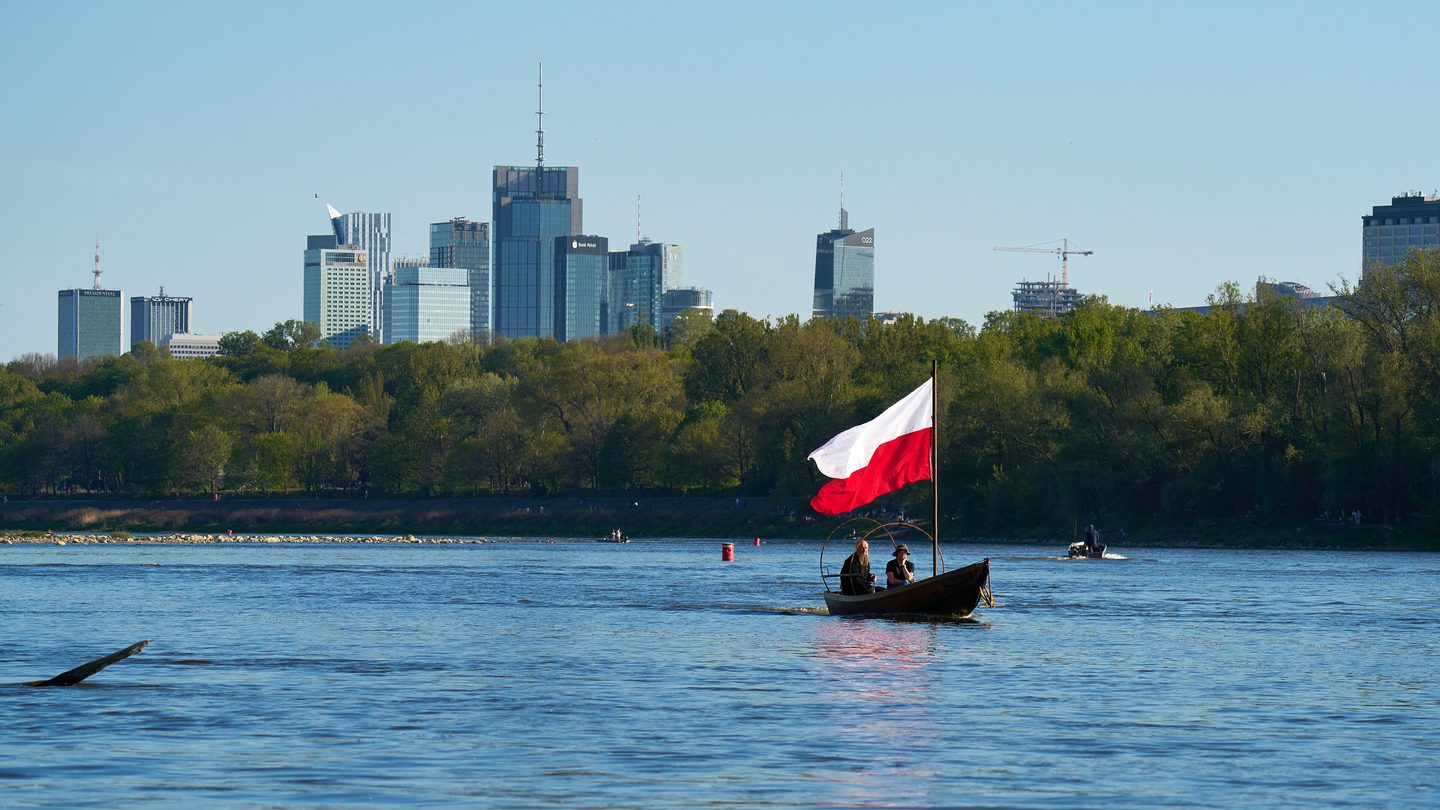
On the eleventh of November, Polish cities put on red and white. Flags appear on houses and trams, ceremonies gather around monuments, while others choose a walk, a concert or a run. Poznań adds a particularly persuasive aroma: bakery windows fill with crescents generously stuffed with white poppy-seed filling. A national anniversary meets the local celebration of Saint Martin.
Polish Independence Day — Narodowe Święto Niepodległości — reveals a country beyond the postcards. It tells the story of a state regained, but also encompasses many modern habits. Not every resident joins a procession, not every family cooks goose, and Gdańsk's celebrations need not resemble those in the capital.
This article was checked on 23.10.2026. What follows brings together historical context, regional flavours and practical pointers. Previous years' programmes are not presented as the coming November's schedule; where an organiser has already confirmed an event for 2026, that is identified separately.
123 years: the story behind a familiar phrase
In the late eighteenth century, neighbouring powers divided the territory of the Polish–Lithuanian Commonwealth. After the final partition in 1795, it ceased to exist as an independent state. Hence the familiar Polish reference to 123 years before independence returned in 1918. Behind that short calculation stand generations who never saw a sovereign Poland.
This is not, however, a story of society vanishing altogether. Family life, education, literature, economic connections and political activity continued. Dependent political entities, or those with limited autonomy, appeared; borders and conditions changed in the different partitioned regions. The phrase about years without independence should not suggest an entirely unchanging situation.
The First World War transformed Europe's political order. The powers that had divided Polish lands found themselves in opposing camps and subsequently faced military defeat, revolution or collapse. An opportunity emerged that Polish political movements and society had been pursuing through different means.
Restoring a state required more than a symbolic gesture: it needed administration, an army, international recognition, decisions on government and struggles over borders. The Polish History Museum examines the birth of the Second Polish Republic as precisely this kind of complex process. That makes more sense than a tale of one person supposedly creating a country in a day.
Why 11 November became the date
Józef Piłsudski returned to Warsaw from imprisonment in Magdeburg on 10 November 1918. The following day, the Regency Council transferred military authority to him. That same day, the armistice on the Western Front took effect, stopping the fighting between Germany and the Entente. Significant Polish events coincided with a moment that changed the sense of what lay ahead across Europe.
Full civilian authority was transferred to Piłsudski on 14 November. Liberation and the formation of Polish authorities proceeded at different speeds in different cities. The country's institutions and borders were not settled in a single day. The Polish History Museum's timeline makes this clear: decisions, negotiations, new institutions and events in different regions sit alongside one another.
Think of the date as a symbolic meeting point rather than the literal birth of every government institution. The armistice was not a final peace treaty with every country either. When a celebration refers to “regaining independence”, the phrase contains the long work of many people: soldiers, diplomats, civic activists and ordinary residents.
How the anniversary became a public holiday
In the interwar period, the November anniversary was observed before a dedicated law existed, through military ceremonies, state occasions and school activities. Its official holiday status was established in 1937. Before the Second World War, it was therefore celebrated in that statutory capacity only in 1937 and 1938. The Sejm explains how the holiday developed.
After the war, the official calendar changed. The holiday was abolished in 1945, and the state celebration of 22 July took centre stage. Under the Polish People's Republic, remembrance of the eleventh of November continued outside its former official framework, including in religious and independent civic circles. That was different from having a nationwide public holiday.
The holiday was restored in 1989. Materials from the Institute of National Remembrance, IPN, help distinguish the date's history, official decisions and unofficial remembrance. For a visitor today, this explains why the same day can feel familial, historical and civic without following one script for everyone.
A city in red and white: different ways to celebrate
The state dimension includes official ceremonies, guards of honour, wreath-laying, the anthem and speeches. In Warsaw, Piłsudski Square and the Tomb of the Unknown Soldier are important locations. Other cities gather at their own places of remembrance. The organiser sets the actual programme, which can change even when the location is familiar from previous years.
There is a more intimate scale too: a family hangs a flag, visits a museum or meets for a walk. Cultural institutions arrange concerts, exhibitions and open programmes; sports organisers stage Bieg Niepodległości, an Independence Run. Spectators see the national colours not only on official platforms but also on runners' clothes and neighbourhood buildings.
Civic and political organisations hold their own processions as well. These should not automatically be treated as a single state ceremony or the shared position of all Poles. Each event has particular organisers, content and rules. Read its description before deciding where to go: a quiet museum programme, a civic parade and a politically identified march are different ways of spending the day.
Rogal świętomarciński: white poppy seeds and a Poznań story
The Saint Martin's croissant is recognisably generous: a crescent of layered yeast dough, icing, chopped nuts and moist filling. White poppy seeds give that filling a pale colour rather than familiar dark speckles, with nuts and the recipe's other ingredients rounding out the sweetness. Cut it open and you see layers of pastry around a substantial filling that is anything but an afterthought.
The connection with 11 November comes from Saint Martin's Day, not a government decision on a national dessert. Poznań's Święty Marcin street bears the saint's name, and its name-day festivities have become an event in their own right. Two calendars meet: remembrance of independence and a local Martinmas tradition.
A popular account connects the pastries with a priest's charitable appeal and confectioner Józef Melzer in 1891. It is best told as a tradition rather than proof of the first croissant's invention: Poznań's official tourism portal points to earlier advertisements. The European product specification identifies an advertisement from 1852. The story of the saint's horse losing a horseshoe is a legend too, giving the shape an image rather than documenting the pastry's origin.
The name rogal świętomarciński belongs to a protected regional product. To try that specific pastry, ask about provenance and labelling rather than relying on a crescent-shaped picture. Not every poppy-seed crescent is the same. Finding the Poznań speciality elsewhere in Poland does not, however, make it every resident's obligatory breakfast.

Gęsina: autumn goose and Saint Martin’s Day
Goose on a November table belongs primarily to the autumn farming calendar and Martinmas traditions. As fieldwork ended, people prepared for winter and managed their stores; goose-eating traditions existed in different European regions. In Poland today, regional food initiatives help maintain and revive them. This should not be presented as an unchanging custom shared by every household.
One accessible example is roast goose with apples. The meat has a rich flavour, the skin browns, and baked apples add softness and a sweet-sharp note. Marjoram appears in traditional descriptions. The Ministry of Agriculture describes Siewierz roast goose and historical culinary sources, while WODR Poznań explains the Martinmas setting.
A family or restaurant menu may use other preparations and accompaniments. Ask how the dish is served here rather than searching for the only “authentic holiday goose”. The tale of Saint Martin being betrayed by honking geese belongs to legend. Seasonality and regional cooking tell us more about today's meal than trying to establish every colourful story as literal fact.

What to try in Poland in November
- Rogal świętomarciński — the Poznań pastry with white poppy seeds; check the product's provenance.
- Gęś pieczona z jabłkami — roast goose with apples, where your chosen venue offers this seasonal preparation.
- Pańska skórka — the Warsaw and Mazovian sweet associated primarily with cemetery visits at the beginning of the month.
- Miodek turecki — a Kraków example of confectionery traditionally sold near cemeteries.
This small November tasting route connects different dates and regions. It does not mean that all the items are eaten specifically on Independence Day or will necessarily be found in any city café. A local tradition is more interesting where it has a story of its own.
Warsaw, Poznań and Gdańsk: different city voices
Warsaw
The capital offers state ceremonial occasions and places of remembrance connected with national history. Yet the city is more than one square: a museum visit or a walk through the historic centre can also make a rewarding day. Check events and road closures on the capital's official portal, and museum access with the institution itself.
Poznań
Here the meeting of Independence Day and Święty Marcin street's name day is especially visible. CK ZAMEK has already announced a market outside the Castle on 11.11.2026, from 11:00 to 21:00. This is a confirmed item in the official announcement, checked when this article was prepared. Consult the organiser for the full programme, admission rules and possible changes; these hours do not imply identical access to all exhibitions and concerts.
Gdańsk
The city has its own Independence Parade and cultural events. The official programme for 2025 illustrates the range: ceremonies, music, walks and civic initiatives. That is last year's example, not the timetable for 2026. Find current announcements on the city portal and with the organisers of your chosen event.
Other cities offer their own ways to mark the day. You need not travel to the capital for a “real” celebration: a local museum, concert or remembrance walk may provide a quieter, more personal encounter with history. In any city, choose the kind of occasion that suits you before building an itinerary.

11 November 2026: practical advice for newcomers
In 2026, 11 November falls on a Wednesday. It is an official public holiday, but that does not stop every profession and service. Ordinary shops and offices generally close; statutory exceptions apply to trading restrictions. Check restaurants, museums and transport through their own announcements rather than assuming one universal holiday arrangement.
Ceremonies, runs and processions may bring traffic and stop changes. Plan your journey home as well as the start of your outing. If dense crowds are not for you, choose a museum time slot, a smaller local programme or a walk away from the main event's hours. This is about comfort and your own pace, not grounds for portraying the entire holiday as dangerous.
Families with children benefit from events with clear durations, entry arrangements and opportunities for breaks. For a run, check registration and conditions separately; an open city walk does not make every sporting event available without booking. If you recently moved, our pointers for everyday life in Poland can help connect holiday plans with ordinary errands best completed in advance.
The flag, the eagle and Mazurek Dąbrowskiego
Poland's flag has a white stripe above a red one. The national coat of arms shows a crowned white eagle on a red field; the flag's colours are connected with state heraldry. There is no need to invent a separate ancient meaning for every decoration, or present one popular interpretation of the colours as official.
The anthem is Mazurek Dąbrowskiego. Józef Wybicki wrote its words in 1797, long before the state was restored; the song became the official anthem in 1927. That combination alone shows how cultural symbols lived across different eras. The ZPE educational portal explains the symbols, while official guidance recalls how to treat them respectfully.
At a ceremony, observe the setting, behave quietly during the anthem and avoid disturbing others. Not knowing the words does not make a foreign visitor unwelcome. You can learn a few expressions beforehand and continue through accessible Polish-language programmes. Understanding usually begins with interest rather than flawless pronunciation.
Six details that reveal another side of the holiday
- Independence returned gradually: the chosen date brings events together but does not replace the whole history.
- The public holiday was established after the state had been restored; before the war it was observed in that statutory capacity only twice.
- Saint Martin's Day and the national holiday share a date but have different origins.
- The pastries existed before the popular charitable story; old advertising helps distinguish a document from a legend.
- The Polish anthem predates the independent state of the modern era, and acquired official status later.
- Goose on the table speaks of the autumn farming and regional calendar, not a compulsory national menu.
Polish words for a city celebrating
- Niepodległość — independence.
- Narodowe Święto Niepodległości — National Independence Day.
- Flaga — flag; biało-czerwoni — “the white-and-reds”.
- Godło — national coat of arms; hymn — anthem.
- Rogal świętomarciński — Saint Martin's croissant.
- Gęsina — goose meat; kiermasz — a fair or market.
- Bieg Niepodległości — Independence Run; obchody — celebrations or commemorations.
Frequently asked questions
Why is the holiday on 11 November?
The date is associated with the transfer of military authority to Piłsudski in 1918 and coincided with the Western Front armistice. Restoring the state was nevertheless a process, not a single instant.
Do all Poles attend the same march?
No. State ceremonies, civic initiatives, political processions, walks and cultural programmes are different formats with different organisers.
Were the croissants invented for Independence Day?
No. Their November tradition is connected with Saint Martin and Poznań. It is older than the modern national holiday.
Does every family have to cook goose?
No. Gęsina belongs to regional and Martinmas traditions, which culinary initiatives also help revive today.
What is known about the Poznań market in 2026?
CK ZAMEK has announced a market outside the Castle on 11.11.2026, from 11:00 to 21:00. Check the organiser's current programme and rules before travelling.
What day of the week is 11 November 2026?
Wednesday. It is a statutory holiday; plan shopping, office visits and selected services around their actual opening arrangements.
Is the holiday suitable for children and foreign visitors?
Yes, with an appropriate open event. Check duration, admission and registration where needed; joining a political procession is not an obligatory part of getting to know the holiday.
Can I use last year’s programme as an itinerary?
As an indication of event types, yes; as a current timetable, no. Check hours, locations, closures and conditions in announcements for the correct year.
Getting to know a country through its holiday
Getting to know Poland does not require rushing to every ceremony. Sometimes it is enough to understand why flags hang over the street, what the anthem speaks about and how that pastry reached the bakery window. The details become a story with room for public memory, local pride and an ordinary family day off.
The most interesting part begins when a solemn date becomes more than a number on the calendar. It helps you hear how a contemporary country talks about its past, and choose your own respectful way to take part in its life today.
Photography and licences
- Photo: Radek Kucharski, CC BY 4.0. Resized and cropped for the website; the photograph retains its licence.
- Photo: Polonist, CC BY 2.0. Resized and cropped for the website; the photograph retains its licence.
- Photo: Bella z Księstwa, CC BY-SA 4.0. Resized and cropped for the website; the photograph retains its licence.
- Gdańsk: Szymon Shields / Unsplash, Unsplash License. Reused from the existing media library, with responsive cropping.


